The summer heat was suffocating. The still air did little to mask the smell of decay as each step we took stirred the layers of trash beneath our feet. We walked slowly from our bus, careful to dodge the refuse carpeting the hillside dump. This was the day we knew would come—a difficult stop on our mission trip. In the middle of the dump, we set up a well-worn plastic table with a pot of soup and stacks of peanut butter sandwiches.
The stench soaked into our senses. In small groups, men and women lined up to receive the hot meal. These weren’t just visitors—they lived and worked in the garbage, sorting through it for scraps of survival. In the distance, the prestigious silhouettes of cruise ships loomed in the harbor. Ironically, the trash from those luxury liners would soon become the treasure these Haitians would fight to retrieve.
And still, there was a subtle change.
Compared to my last visit in 2024, there were fewer children in the line. Last year, toddlers and young girls carrying babies had overwhelmed the scene, the weight of their presence seared into my memory. This time, mostly adults came—many of them workers paid a meager wage to sort through the filth. It felt like progress, a glimmer of hope. But then I saw her.
She was a Haitian woman, visibly pregnant, and clearly living in this filth. My heart hurt.
I’ve welcomed all four of my sons into the world in the comfort of our home. I can’t imagine the fear of giving birth in a place like this—a place where rats outnumber resources, and the air itself feels poisoned. Yet here she was. Her situation wasn’t uncommon. “You’d be surprised how many babies are born in the dump,” our missionary would later tell us.
We gave everything we had. Every last drop of soup, every crust of bread. Still, it felt like a drop in an ocean of depravity.
My mind searched desperately for someone to blame. Some systemic injustice, some policy failure, some root cause. But the brokenness we witnessed isn’t confined to one country, one group, or one region. Poverty, perversion, and oppression are demons that stalk every corner of the world. They wear varying masks, but their aim is always the same: to steal, kill, and destroy the image of God in every man, woman, and child.
In a few months, my oldest son and I will journey to Greece to serve in red-light districts—places where darkness seeks to torment the souls of the innocent. During our last visit to Athens, even amid its storied ruins and ancient beauty, we couldn’t escape the signs of decay. Graffiti screamed from once-sacred walls. Images of sensuality, rebellion, and darkness marred historic corners. The demons were different, but the destruction was the same.
And yet, even here—especially here—a greater truth breaks through.
More than a century ago, Abraham Kuyper declared:
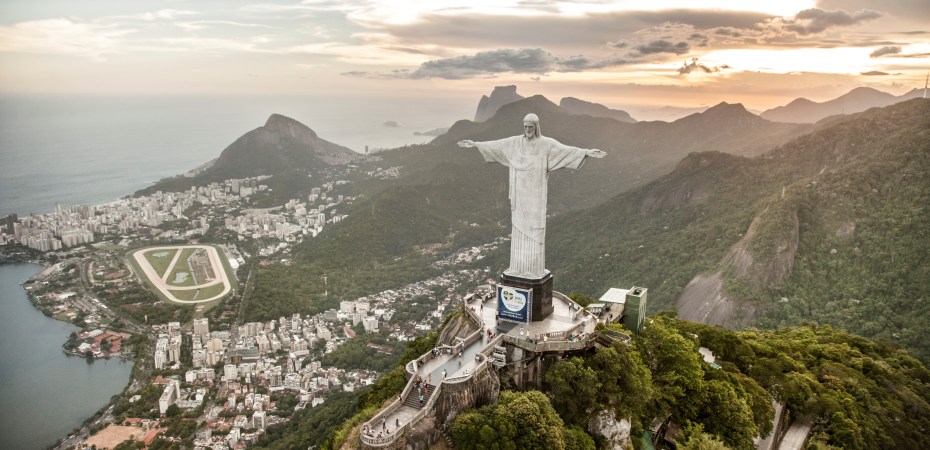
“There is not a square inch in the whole domain of our human existence over which Christ, who is Sovereign over all, does not cry, ‘Mine!'”
That declaration still rings true. Jesus is Lord—over dumps and districts, over nations and neighborhoods. His Lordship is not symbolic. It is supreme. It must stretch into every arena of culture: government, education, science, entertainment, and economy. Where His reign is not established, chaos thrives. When we push Christ to the margins, darkness gladly fills the void.
And this is why we go.
Not simply to feed the hungry.
Not just to offer kindness.
But to proclaim and demonstrate the power of Jesus to redeem every inch of creation and every fragment of the human soul.
We carry the hope that one day, as Revelation 11:15 declares,
“The kingdoms of this world will become the kingdom of our Lord and of His Christ.”
This isn’t a distant dream. It’s the mission of every disciple of Jesus.
Jesus told us plainly:
“This gospel of the kingdom will be preached in all the world… and then the end will come.” (Matthew 24:14)
We are not called to merely distribute information about Jesus. We are called to embody His kingdom, to bear witness to its transforming power—from the depths of poverty in the Dominican Republic to the philosophical ruins of ancient Greece. Jesus is enough—for the destitute and the dignified, for the enslaved and the elite.
He redeems the addict and the academic.
He heals the wounds of the poor and exposes the pride of the powerful.
He doesn’t just fill empty stomachs. He fills empty hearts.
He doesn’t just change environments. He transforms culture.
To every follower of Jesus, can I propose that this work of redeeming lives is not an optional work, it is the only work we are given.
It begins with you simply saying yes.
Yes to stepping out.
Yes to surrendering comfort.
Yes to going where the need is great and the workers are few.
Yes to being the hands, feet, and voice of Jesus in your areas of influence, in a places that are drowning in darkness.
The world is waiting.
The Kingdom is advancing.
And Jesus declares over every square inch of this world, “This is Mine!”
 stephensamuel.org